Talk: 15:50–16:35 (English)
Zero Knowledge Proof? That Sounds Useless!
To the contrary! Zero-knowledge proofs (ZKPs) let you prove that something is true without revealing why it’s true. That may sound like a magic trick, but it’s immensely practical: verifying that a computation was done correctly without re-running it, proving you’re over 18 without showing your ID or revealing your date of birth, or even checking the integrity of an election without exposing any ballots.
This talk introduces ZKPs for programmers who haven’t studied cryptography. We’ll explore where they can be applied, and build an intuitive, qualitative understanding of how they work. You’ll learn the key mathematical ideas, like polynomial commitments and arithmetic circuits, only to the depth needed to see why they matter, not to prove the theorems behind them.
To round things off, we will look at ways of implementing ZKPs. Luckily, the days where you needed to manually construct a circuit representing your calculation are gone, and there are Domain Specific Languages (DSLs) available that can do the heavy lifting for you. To demonstrate how that works, we will look at a concrete example of a ZKP written in the Noir language.
By the end, you’ll know what ZKPs are, why they’re useful, and how to start experimenting with them yourself – no crypto background required.
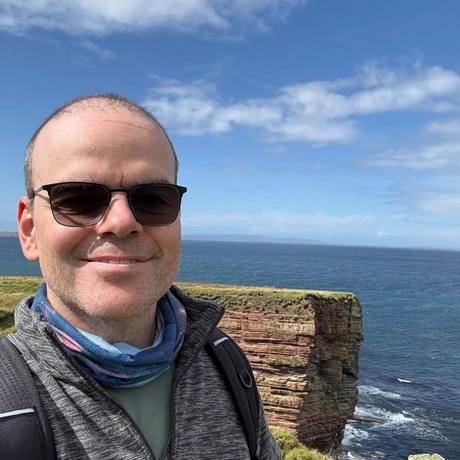
Philipp Kant
Philipp began his career in theoretical particle physics, where he discovered a love for elegant abstractions—and eventually for functional programming. After leaving academia, he switched to software engineering and has worked in the blockchain space since 2017, contributing to the design and implementation of Cardano and later Mina Protocol, which uses zero-knowledge proofs to keep the chain succinct and avoid much of the redundancy that’s ingrained into most blockchain systems.
He is now a co-founder of Ensurable Systems, offering consulting and engineering around blockchain and zero-knowledge technology. Philipp enjoys making complex ideas approachable and showing that deep tech can be explained without heavy math. When not thinking about proofs or protocols, he enjoys reading to his kids, hiking, and the occasional game of Magic: The Gathering.