Talk: 11:05–11:50 (English)
From Functions to Proofs: How I used Lean4 to Learn Pure Math
Lean has been getting a lot of attention lately. We’ve been bombarded by news of Lean being used by frontier labs to prove theorems and disprove conjectures. At the cutting edge of the debate, some ask whether machines will soon do mathematics better than humans. But leave all that hype aside: for the rest of us, Lean is an extremely useful tool that anyone with a knowledge of functional programming can leverage to learn pure mathematics.
Here’s the workflow I’ll demonstrate: take any mathematics exercise, translate it into Lean, and then prove it yourself. Mathematics isn’t magic — it’s logic, and logic, by the Curry–Howard correspondence, is just code. In the talk, we’ll:
- see what that code actually looks like
- prove the Gauss summation formula (n(n+1)/2) and why Lean makes proving this easy and fun
- see why this scales — the supply of exercises is endless: every textbook, every problem set.
This workflow is important to the hobbyist because it provides a feedback loop that “on-paper” mathematics lacks. With Lean, the Infoview tells you whether you’re moving closer to the goal. That feedback can make the difference between carrying on and giving up, understanding and confusion.
My goal is that the attendee walks away with
- the clarity to understand what it means to prove a theorem
- the motivation to start learning on their own
- the optimism that there’s never been a better time for anyone to learn some mathematics.
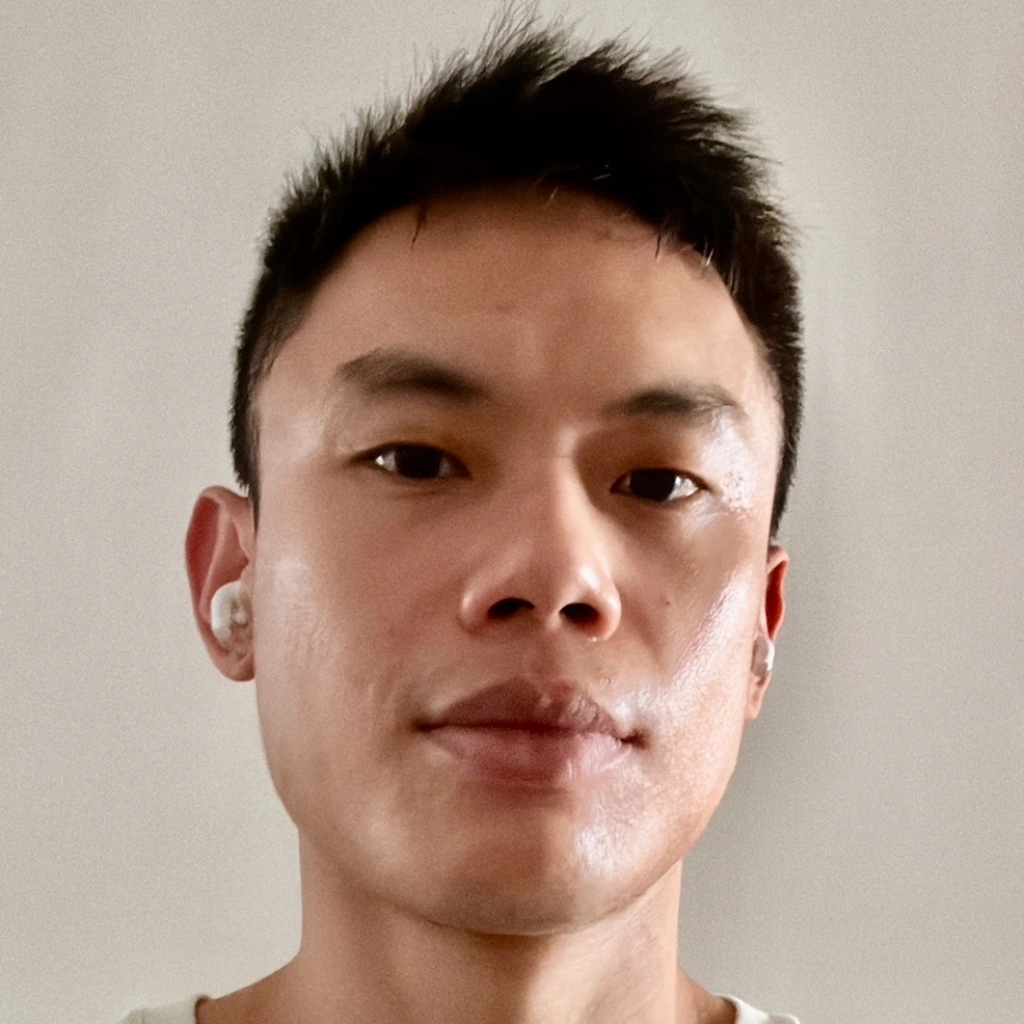
Jireh Tan
Jireh is a data scientist and statistician. He is a core contributor to dataHaskell, the Haskell ecosystem’s leading DataFrame library. A longtime functional programmer with an M.S. in Statistics from Stanford, he has taught data science and SQL for years — and now spends his spare time learning pure mathematics with Lean.